If you walk past my resource room, there’s a pretty good chance you’ll wonder what exactly is happening in there.
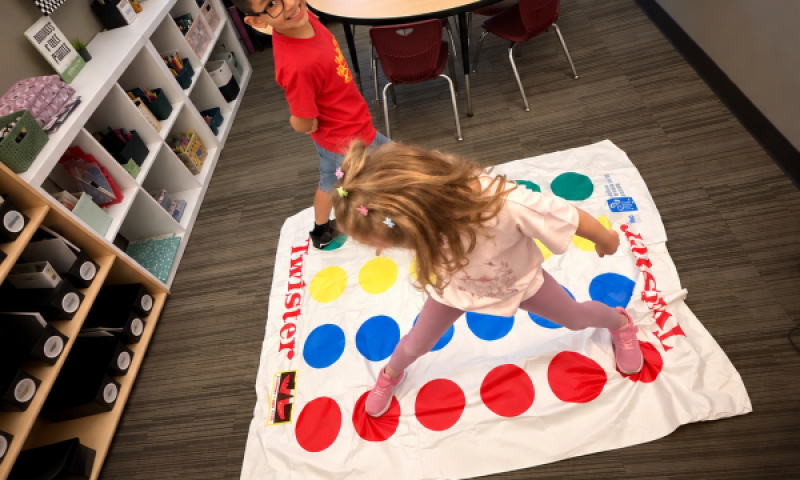
You might see a kid stretched across a Twister mat. You might hear us singing. We might be dancing, jumping, clapping, or shouting out sounds. Occasionally, it probably looks like we’re just having a really good time.
And honestly? We are.
But we’re also learning.
One thing I’ve been having a lot of fun with this year is finding more ways to bring play and movement into our interventions. Our students spend a lot of their school day sitting, listening, writing, and working hard. When they come to my room for extra practice on skills that are already tricky for them, sometimes the last thing they need is another worksheet.
Enter: the Twister mat.
We’ve been using it to tap out sounds in CVC words, blend words, practice phonemic awareness, and get our whole bodies involved in learning. But that’s just one example. We might sing a skill to a ridiculous tune, dance while we practice, shout out an answer, build something, toss something, jump from sound to sound, or turn practice into a game.
It might look a little silly from the hallway, but there’s always a purpose behind the play. I’m still choosing activities based on exactly what each student needs to practice. We’re just changing how we practice it.
Play-based learning gives kids a chance to move, experiment, problem-solve, communicate, and practice skills again and again without it feeling like we’re doing the same thing over and over. And when something is already hard for a student, a little movement, music, laughter, and silliness can make it easier to keep trying.
So if you walk past our room and hear us singing at the top of our lungs, see us dancing, or catch someone practically doing the splits on a Twister mat, we promise there’s a method to the madness.
It might look like play. But around here, the play has a purpose.
